
Imagine leaving the roads of northern Belize behind, climbing into a small boat, and heading upstream through a narrow river surrounded by thick tropical forest. Birds flash between the trees, crocodiles may appear along the banks, and the distant calls of howler monkeys echo through the jungle. Lamanai Belize
Then, almost suddenly, the forest opens and the ancient Maya world of Lamanai Belize comes into view.
Lamanai is one of Belize’s largest and most fascinating Maya archaeological sites. Located in the Orange Walk District beside the New River Lagoon, the site was occupied for more than 3,000 years and retained its Maya name through much of its long history. Archaeological remains here include monumental temples, plazas, a ball court, colonial Spanish churches, and the remains of a later sugar mill.
For independent travelers, couples, and adventure seekers, the journey is part of the attraction. In this guide, I’ll cover what to see at Lamanai, how to get to Lamanai, entrance fees, the river journey, the best time to visit, what to pack, and whether Lamanai is worth adding to your Belize itinerary.
Important 2026 update: Some older travel guides still list the former BZ$10 (US$5) non-resident entrance fee. Belize’s current official information lists BZ$25 (US$12.50) for non-residents, so check the official NICH information before your trip.
| Key Detail | Information |
|---|---|
| Location | Orange Walk District, Northern Belize |
| Main Attraction | Mask Temple & High Temple |
| Current Entrance Fee | BZ$25 (US$12.50) for non-residents |
| Opening Hours | 8:00 AM – 5:00 PM (Daily) |
| Best Way to Visit | River boat tour from Orange Walk |
| Ideal Time Needed | Half-day to full-day excursion |
What Makes Lamanai Belize Special?
Lamanai feels different from a typical archaeological attraction.
You aren’t simply driving into a parking lot, walking a few hundred meters, and seeing a pyramid. The classic experience begins on the New River, where the boat ride itself becomes part of the adventure.
According to the Belize Tourism Board, the site was occupied for more than 3,000 years and contains architecture from the Pre-Classic and Classic Maya periods. Visitors can also see evidence of later Spanish and British activity, making Lamanai a place where several chapters of Belizean history overlap.
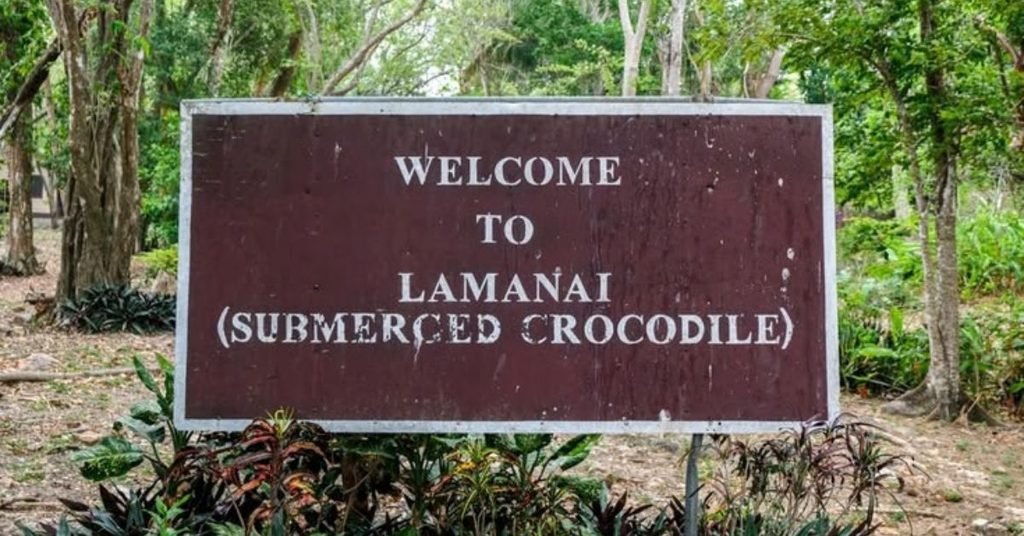
The name Lamanai is generally translated as “Submerged Crocodile,” a fitting name for a settlement beside waterways and tropical wetlands.
The setting is equally memorable. Dense vegetation surrounds the archaeological reserve, and wildlife can be encountered both during the river journey and around the ruins. The Belize Tourism Board specifically mentions species such as snail kites, jacanas, Morelet’s crocodiles, and iguanas along the route.
For me, that combination is what makes Lamanai particularly appealing: history, jungle, wildlife, and adventure all happen during the same day.
The Main Lamanai Mayan Ruins to See
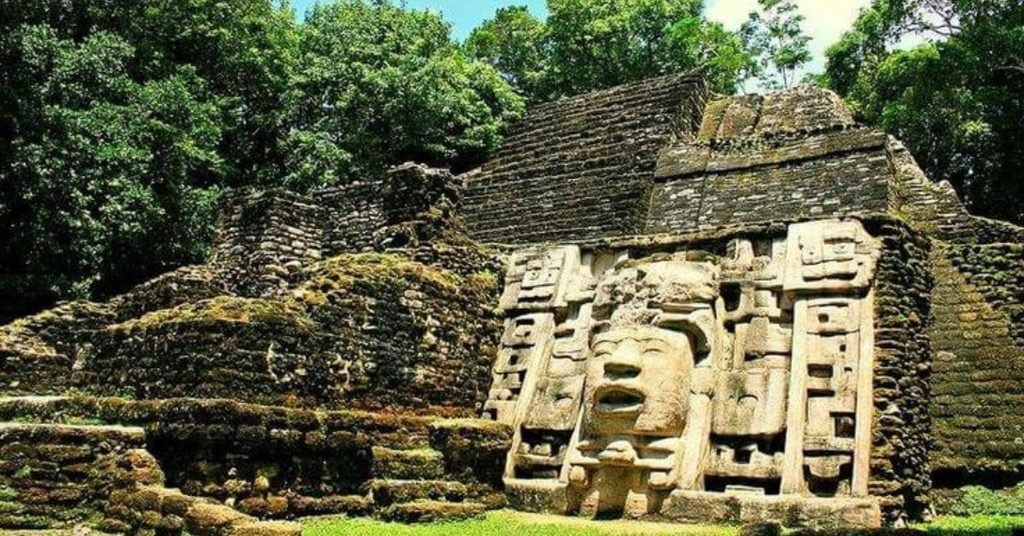
A visit to Lamanai should not be treated as simply “seeing some old pyramids.” Each major structure tells a different part of the site’s story.
Lamanai Mask Temple
The Mask Temple is one of the most recognizable structures at Lamanai.
Its enormous carved masks are the feature that immediately catches your attention. The masks represent Maya imagery associated with rulers and religious symbolism, and their scale makes them particularly impressive when you’re standing beneath the structure.
One of Lamanai’s best-known archaeological features is a large mask associated with a Maya ruler emerging from a crocodile headdress. The Belize Tourism Board identifies this as a major attraction at the site.
Look carefully at the details rather than simply taking a quick photograph. The facial features, surrounding decoration, and scale of the structure give you a better appreciation of how much effort went into Maya monumental architecture.
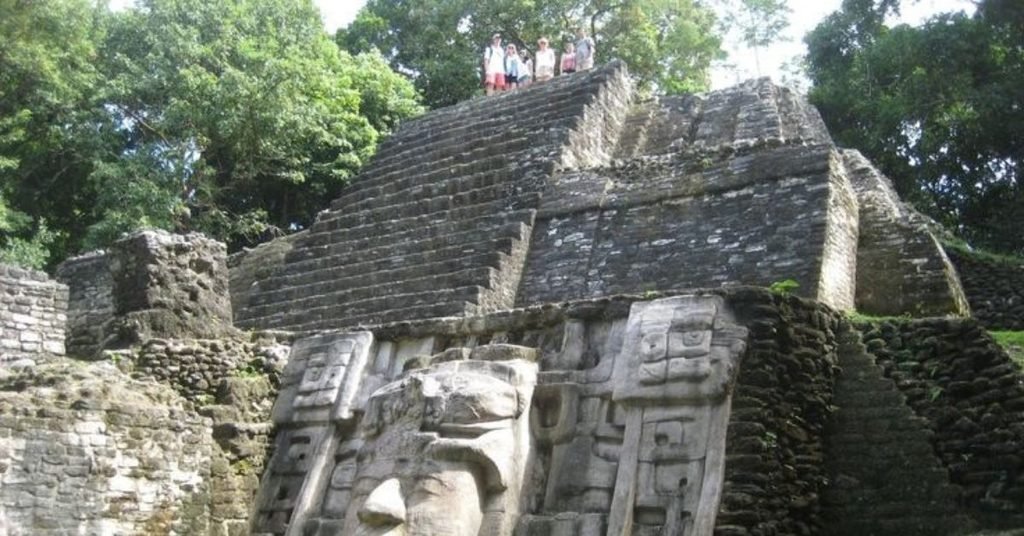
High Temple Lamanai
The High Temple is probably the structure most visitors picture when they think about Lamanai.
It rises dramatically above the surrounding vegetation and provides an elevated perspective over the jungle and lagoon.
If climbing is permitted and you are comfortable with steep, uneven steps, reaching the upper section can be one of the highlights of the visit. From above, the thick canopy gives you a completely different understanding of Lamanai’s setting.
The archaeological research on Lamanai identifies the High Temple as Structure N10-43 and describes major construction beginning around the Late Preclassic period.
Travel tip: Don’t rush the climb. Take your time, use the available handrails where provided, and remember that archaeological structures can have steep or uneven surfaces.
Jaguar Temple
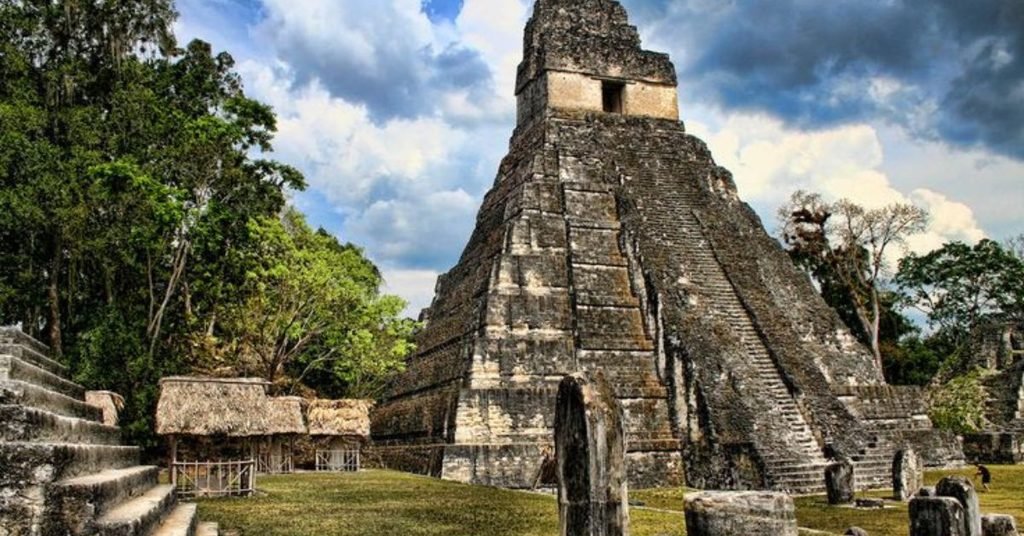
The Jaguar Temple is another major structure within the central archaeological area.
Its name comes from the distinctive jaguar-related decoration associated with the temple. Archaeological research identifies Structure N10-9 as the Jaguar Temple and describes the surrounding area as an important focus of public life during Lamanai’s Late Classic period.
This is also a good place to slow down and listen to your surroundings.
You may hear insects, birds, or monkeys moving through the forest while standing beside architecture that was built centuries ago. That contrast between ancient stone and living rainforest is one of Lamanai’s defining characteristics.
Royal Complex
The Royal Complex adds another dimension to the site.
Rather than thinking of Lamanai as a collection of isolated pyramids, look at the arrangement of plazas and structures as evidence of a much larger community.
Lamanai wasn’t built simply as a tourist attraction or isolated ceremonial monument. It was a functioning Maya settlement with residential, political, religious, and economic activity occurring over a very long period.
A knowledgeable guide can make these relationships much easier to understand.
Ball Court
Lamanai also contains a Maya ball court, offering another glimpse into the ceremonial and social life of the ancient settlement.
The Belize Tourism Board notes that archaeologists discovered liquid mercury in an offering placed below the ballcourt marker, an unusual archaeological discovery that provides another fascinating detail about ritual activity at Lamanai.
Wildlife Around Lamanai
Don’t spend your entire visit looking at stones.
Look up.
Look into the trees.
And listen.
The surrounding forest is home to a variety of wildlife, and the New River journey can be particularly rewarding for birdwatchers and nature lovers.
Possible sightings include:
- Howler monkeys
- Spider monkeys
- Iguanas
- Morelet’s crocodiles
- Snail kites
- Jacanas
- Other tropical birds and wildlife
Wildlife is never guaranteed, however. Treat sightings as a bonus rather than something your itinerary depends on.
Lamanai’s History Goes Far Beyond the Temples
One reason I recommend taking time to understand Lamanai’s history is that the story doesn’t end with the Maya period.
The official archaeological information from Belize’s National Institute of Culture and History describes Lamanai as having one of the longest occupation spans in the region, with evidence beginning around 1500 B.C. and continuing through later historical periods.
The Belize Tourism Board places settlement at around 900 B.C. and notes that the community was still occupied when Spanish missionaries arrived in the 16th century.
Two Spanish churches remain as reminders of that period.
Later, in the 19th century, a sugar operation was established at Lamanai. The archaeological reserve therefore isn’t just a window into ancient Maya civilization; it also preserves evidence of Belize’s colonial and industrial history.
That long timeline is easy to overlook when you’re standing in front of a pyramid.
It shouldn’t be.
How to Get to Lamanai
For most travelers, how to get to Lamanai comes down to choosing between a river-based excursion and an overland journey.
Lamanai Tour From Orange Walk
For an independent traveler, Orange Walk Town is the natural base for visiting Lamanai.
The classic route is a boat trip along the New River. Belize’s tourism authorities specifically promote the river journey from Orange Walk to the Maya temples.
The river ride isn’t merely transportation.
It’s part of the experience.
As the boat moves through the jungle, keep your camera ready and listen to your guide. Wildlife spotting, local history, and scenery turn the journey into something closer to a river safari.
Many full-day excursions combine:
- Transportation to the boat departure point
- New River boat journey
- Lamanai entrance
- Guided archaeological tour
- Lunch
- Return boat journey
Exact prices and inclusions vary between operators, so confirm what is included before booking.
Lamanai Tour From Belize City
A Lamanai tour from Belize City usually involves a longer transportation day than departing from Orange Walk.
Travelers can arrange organized excursions that combine road transportation with the river experience. Because Belize City is farther away, tours from the city generally require an earlier departure and more time on the road.
If you’re staying in Belize City and have only one free day, an organized excursion can simplify the logistics considerably.
Getting to Lamanai From San Pedro
Travelers staying on Ambergris Caye or in San Pedro will have a longer journey because Lamanai is inland in northern Belize.
A San Pedro visit typically requires arranging transportation to the mainland before continuing toward Orange Walk and the New River. For this reason, a professionally organized day excursion can be easier than trying to coordinate multiple independent connections.
If you’re already planning several mainland excursions, consider spending a night in northern Belize instead of trying to squeeze everything into one exhausting day.
Can You Drive to Lamanai?
Yes, overland access is possible via the Indian Church area, but the road experience is considerably different from the river journey.
Travel information from the Indian Church community describes reaching the area from Orange Walk by road.
The road option can appeal to travelers who have a rental car and prefer independent exploration. However, road conditions can vary, and the river route offers a much more memorable approach.
If this is your first Lamanai visit, I’d personally prioritize the New River boat experience rather than treating the boat as something to avoid.
Lamanai Entrance Fee and Opening Hours
This is one area where older online articles can cause confusion.
The current official NICH information lists Lamanai as open every day from 8:00 AM to 5:00 PM, including Sundays and public and bank holidays. It also states that the last tour of the day is one hour before closing.
The current non-resident entrance fee is BZ$25, or approximately US$12.50.
Current Lamanai visitor information
- Non-resident admission: BZ$25 / US$12.50
- Opening hours: 8:00 AM–5:00 PM
- Open: Daily
- Visitor center: Yes
- Restrooms: Yes
- Picnic area: Yes
- Trails: Yes
- Parking: Yes
- Boat docking facility: Yes
- Gift shop: Yes
These amenities are listed by Belize’s National Institute of Culture and History.
Important: Your tour package may include the archaeological entrance fee, so check before paying separately.
A Realistic Lamanai Day-Trip Itinerary
Your exact schedule will depend on your departure point and tour operator, but here’s a practical example for planning purposes.
8:00 AM – Depart
Leave your accommodation early and head toward the New River departure point.
Morning departures are useful because the temperatures are generally more comfortable for walking and temple climbing.
9:00 AM – Begin the New River Cruise
Board the boat and begin traveling toward Lamanai.
Keep your camera accessible rather than buried in your luggage.
10:00 AM – Arrive at the Archaeological Reserve
Begin the guided ruins tour.
Spend time around the Mask Temple, Jaguar Temple, High Temple, plazas, and ball court.
12:30–1:00 PM – Lunch
Take a break after walking through the archaeological reserve.
Depending on your tour, lunch may be included. Confirm this before booking.
2:00 PM – Additional Exploration
Use the extra time to photograph the jungle surroundings, revisit a favorite structure, or explore areas included in your guided route.
3:00 PM – Begin Return Journey
Board the boat and travel back toward your departure point.
This is another opportunity for wildlife spotting.
4:00 PM – Return
Arrive back near your starting point and continue to your accommodation.
Note: This is a sample framework, not an official timetable. Actual boat departures, tour duration, and road travel times vary.
Best Time to Visit Lamanai
The dry season from December through May is generally the easiest period for travelers planning outdoor activities in Belize.
That doesn’t mean the wet season is automatically a bad time.
Rain can make the jungle feel even more dramatic, but muddy trails, changing road conditions, and sudden tropical showers can complicate the day.
If your schedule is flexible, I would aim for:
December through April for a comfortable combination of relatively dry weather and good conditions for outdoor exploration.
For the most comfortable experience, start early.
The combination of tropical heat, walking, and climbing can become tiring later in the day.
What to Wear and Pack for Lamanai
Lamanai is not the place for fashion-first footwear.
Choose practical clothing that can handle heat, humidity, insects, and uneven ground.
I recommend bringing:
- Lightweight breathable clothing
- Comfortable walking shoes
- Insect repellent
- High-SPF sunscreen
- Refillable water bottle
- Hat or cap
- Sunglasses
- Camera or phone
- Small backpack
- Light rain jacket
- Portable power bank
- Small amount of cash
Wear shoes with good grip if you plan to climb the temples.
The official NICH visitor guidance specifically recommends outdoor-appropriate footwear and asks visitors to remain on designated trails and follow site safety rules.
Is Lamanai Safe?
For most visitors, the bigger practical concerns at Lamanai are heat, insects, uneven terrain, water exposure, and protecting your belongings rather than the ruins themselves.
Follow the guide’s instructions and stay on designated trails.
NICH specifically advises visitors to remain on demarcated trails, use handrails where provided, avoid jumping on monuments, and avoid loud noise.
Keep your valuables secure
During the boat ride and jungle walk, carry only what you need.
A small backpack is easier to manage than a large day bag.
If you’re photographing wildlife from the boat, use a secure strap. Phones and cameras are much easier to protect when they’re attached to you rather than sitting loose on a seat.
Also remember that wildlife is wild.
Don’t attempt to approach, feed, or touch animals for a photograph.
Lamanai Visitor Center and Amenities
You won’t be completely cut off from civilization.
The official NICH listing confirms several useful facilities at the reserve, including a visitor center, restrooms, picnic area, trails, parking, boat docking facility, and gift shops.
Still, I’d recommend using the bathroom before heading deep into the archaeological area and carrying water with you.
Cell service can vary depending on your provider and exact location, so don’t plan your entire day around having a reliable mobile connection.
Download important booking information and directions before leaving your hotel.
Tips for Couples and Independent Travelers
For couples
Lamanai works particularly well as a shared adventure.
The boat journey gives you time to relax together, while the archaeological reserve provides plenty of opportunities for photography and exploration.
Don’t rush from temple to temple.
Take a few quiet minutes beneath the forest canopy and enjoy the atmosphere.
For independent travelers
If you prefer flexibility, consider staying in or near Orange Walk and arranging your Lamanai excursion locally.
This gives you more time to experience northern Belize instead of treating Lamanai as a rushed side trip from the coast.
For adventure seekers
Choose the river route.
The journey through the New River is one of the defining parts of visiting Lamanai. The combination of water, wildlife, jungle scenery, and ancient architecture makes the excursion feel much more adventurous than a conventional archaeological-site visit.
A Few Things I Wouldn’t Do at Lamanai
Don’t arrive without checking current fees.
The entrance price has changed, and older online articles still show the previous BZ$10 non-resident rate. The current official NICH information lists BZ$25.
Don’t underestimate the heat.
The jungle environment can feel much hotter once you’re walking and climbing.
Don’t wear slippery sandals.
Uneven terrain and temple steps call for proper footwear.
Don’t rely entirely on your phone.
Download reservations, directions, and important information beforehand.
Don’t rush the river journey.
The boat ride is one of the reasons to choose Lamanai in the first place.
Is Lamanai Worth Visiting?
Yes especially if you want more than a conventional Maya-ruins tour.
Lamanai combines several experiences in one journey: ancient Maya architecture, dense rainforest, wildlife, river travel, and layers of history that extend beyond the Maya period.
The Mask Temple provides some of the site’s most memorable archaeological imagery. The High Temple delivers the dramatic elevated jungle perspective. The Jaguar Temple adds another important architectural and historical dimension, while the New River makes getting there part of the adventure.
What I find most compelling about Lamanai is the atmosphere.
You’re not simply standing in front of an ancient pyramid.
You’re standing in a tropical landscape where people lived, worshipped, traded, built monuments, and adapted to their environment for thousands of years. Later, Spanish missionaries arrived, and centuries afterward another chapter unfolded through the area’s sugar industry.
That depth is what makes the journey memorable.
If you’re planning a Belize trip and have time for only one northern Maya-site adventure, Lamanai deserves serious consideration particularly if the idea of combining archaeology with a jungle river safari appeals to you.
And when you finally return from the New River, covered in a little jungle dust and carrying a camera full of temple photographs, you’ll have more than another sightseeing stop to remember.
You’ll have a story.
Have you visited Lamanai Belize, or are you planning a trip there? Share your experience, questions, or favorite Maya-site memories in the comments on WordisHub.

1 thought on “Lamanai Belize: A Jungle Journey to Ancient Maya Ruins”