
The first thing you notice in Santorini is not the famous blue domes. It is the light. The Aegean seems to catch every ray of sun, bouncing it across whitewashed walls, volcanic cliffs, and the deep blue caldera below. [Santorini Travel Guide]
As we walk through the narrow lanes of Oia or Fira, the scenery constantly changes: a tiny church appears around a corner, fishing boats move across the water, and volcanic rock rises dramatically from the sea. Then evening arrives, and the island turns golden.
Santorini is much more than a beautiful sunset destination. Its volcanic landscape, Bronze Age archaeology, black-sand beaches, vineyards, villages, food, and hiking routes make it surprisingly diverse. Greece’s official tourism authority describes the island as an arid volcanic destination shaped by repeated eruptions and the collapse of its caldera.
This Santorini travel guide covers what to see, how to get around, where to spend your time, realistic 2026 costs, and how to plan a trip without wasting precious island days.
2026 update: Transport fares and attraction information below are based on sources checked for the 2026 travel season. Prices can change by date, season, operator, or availability, so confirm them before booking.
Santorini Travel Guide at a Glance
| Travel Detail | Information |
|---|---|
| Location | Santorini, Cyclades, Greece |
| Best for | Couples, independent travelers, photography, history, hiking, food and wine |
| Main airport | Santorini Airport (JTR) |
| Main ferry port | Athinios Port |
| Entry fees | Many villages, viewpoints and beaches are free; archaeological sites and museums charge separate admission |
| Public bus fares | Generally about €2.20–€2.80 on many common routes from Fira |
| Ideal duration | 3–5 days |
| Best way to visit | Walk + KTEL buses, with a rental car for exploring the south |
| Best seasons | Late spring and early autumn for a balance of weather and crowds |
| Signature experience | Caldera views, Oia sunset, volcanic landscapes and Akrotiri |
Why Visit Santorini?
Santorini sits at the southern end of the Cyclades and is actually an island complex consisting of Thera, Thirasia, Aspronisi, Palea Kameni and Nea Kameni. Its extraordinary landscape was formed by volcanic activity and the enormous caldera created by ancient eruptions.
That geology is responsible for much of what makes the island unusual.
Instead of a conventional Mediterranean coastline, you get enormous cliffs overlooking the caldera, volcanic beaches, black sand, red rock formations and villages built into steep slopes.
The island also has a strong food and wine identity. Santorini is particularly associated with vines, fava beans, tomatoes and local dishes such as tomatokeftedes, or tomato fritters.
For me, that combination is what makes the destination interesting: you can spend one morning exploring a Bronze Age settlement, an afternoon swimming beside volcanic cliffs, and an evening watching the sun disappear over the Aegean.
Best Things to Do in Santorini
1. Explore Oia
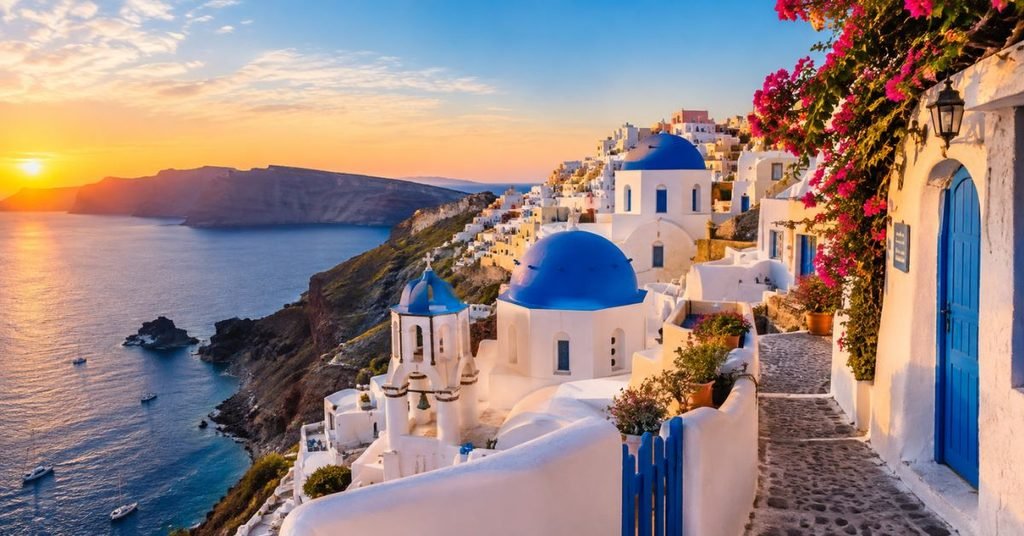
Oia is the village most closely associated with Santorini’s postcard image.
Whitewashed buildings cling to the caldera cliffs, blue-domed churches appear between narrow pathways, and small terraces overlook the sea.
The village is especially atmospheric in the morning before the busiest hours arrive.
Best photography spots in Oia
Look for:
- Blue-domed churches
- White cave houses
- Caldera viewpoints
- Windmills
- Castle ruins
- Narrow pedestrian lanes
- Ammoudi Bay viewpoints
The famous sunset is worth experiencing, but don’t spend your entire Oia visit waiting for it.
Walk around earlier in the day when you can actually appreciate the architecture.
The official Greek tourism route specifically highlights Oia’s traditional architecture and its position along the caldera, while also identifying the sunset as one of Santorini’s signature experiences.
2. Walk Through Fira
Fira is Santorini’s main town and one of the best bases for independent travelers.
It is busier than some of the smaller villages, but that also makes it practical. You will find restaurants, shops, accommodation, transport connections and museums.
The caldera edge provides spectacular views, particularly around sunrise and late afternoon.
Don’t skip Fira’s museums
The Archaeological Museum of Thera contains artifacts covering Santorini’s ancient history. As of the current 2026 information, general admission is €10, with reduced admission at €5; listed hours are 08:00–20:00, with Tuesday closure.
The Museum of Prehistoric Thera is another important stop because it helps explain the ancient settlement of Akrotiri and the civilization that existed on Santorini before the great eruption.
For travelers interested in history, these museums add context that the beautiful scenery alone cannot provide.
3. Discover Akrotiri
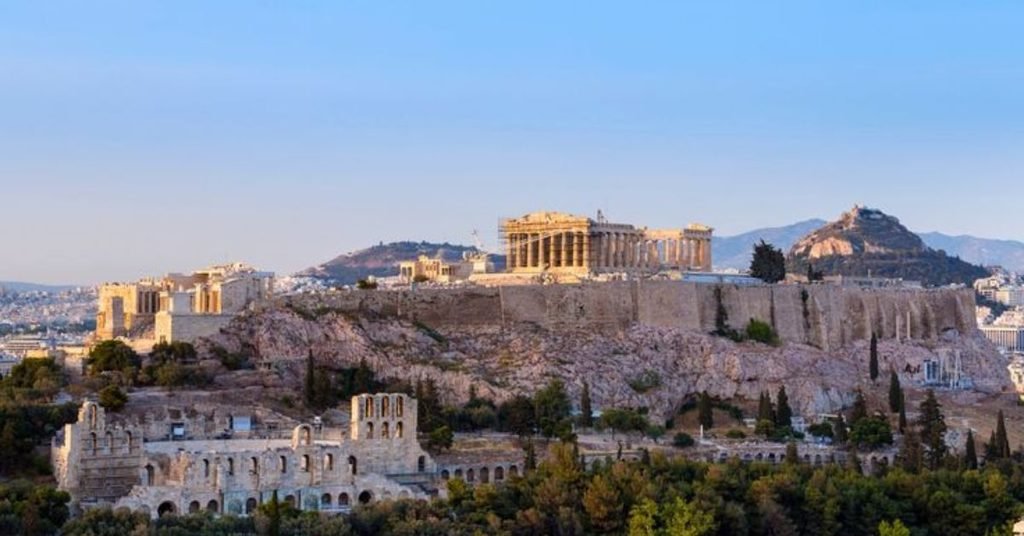
Akrotiri is one of the most fascinating places on the island.
This prehistoric settlement was buried beneath volcanic ash during the major eruption in the late 17th century BC. The eruption preserved streets, buildings, objects and remarkable evidence of Bronze Age life.
Walking through the archaeological site feels completely different from strolling around Oia.
Instead of looking at the modern postcard version of Santorini, you’re seeing the civilization that existed here thousands of years ago.
Why Akrotiri matters
Akrotiri was an important prehistoric settlement and port. Its preservation beneath volcanic material has made it one of the most significant archaeological sites associated with Santorini.
Allow 1.5–2 hours for a relaxed visit.
Afterward, continue toward the Red Beach area if conditions and access allow.
4. See Santorini’s Red Beach
Near Akrotiri, the landscape changes dramatically.
The cliffs around Red Beach display reddish volcanic rock against the Aegean, creating one of the island’s most distinctive coastal scenes. The official tourism authority also identifies Red Beach as one of Santorini’s characteristic volcanic landscapes.
However, don’t treat dramatic scenery as permission to ignore safety barriers or local access restrictions.
Volcanic terrain can be unstable, and conditions can change.
For photography, the surrounding viewpoint is often enough to appreciate the landscape without trying to stand in an unsafe location.
5. Visit Perissa and Perivolos
If your idea of a Greek island holiday includes swimming and relaxing beside the sea, head toward the southern and southeastern beaches.
Perissa, Perivolos and Agios Georgios form a long stretch of coastline associated with dark volcanic sand and water activities.
These beaches offer a completely different experience from the cliffside villages.
Bring:
- Water shoes or sturdy sandals
- Sunscreen
- Sunglasses
- Water
- A beach towel
- Light clothing
The dark sand can become extremely hot under strong summer sun.
6. Take a Volcano and Caldera Cruise
Santorini’s volcanic history becomes much more tangible when you get onto the water.
Cruises can include Nea Kameni, Palea Kameni, hot springs and views toward Thirasia. Boats can depart from locations including Fira’s bay, Athinios, Ammoudi and Vlychada, depending on the tour.
At Nea Kameni, visitors can walk across volcanic terrain toward areas associated with fumarolic activity.
Bring proper footwear rather than flip-flops. The official tourism route specifically recommends comfortable closed shoes for the volcanic walk.
7. Walk the Fira-to-Oia Route
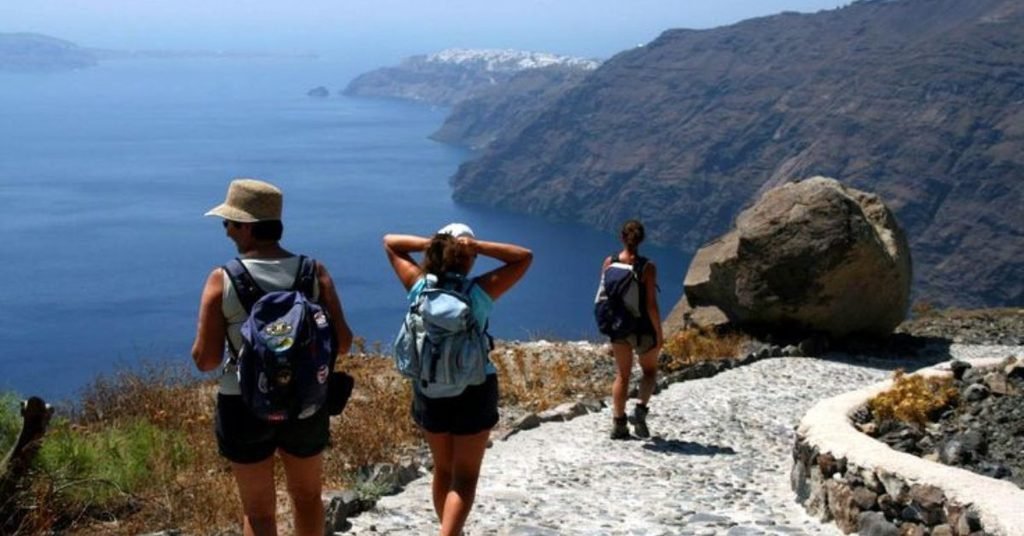
For adventure seekers, this is one of the experiences I’d prioritize.
The route follows the caldera rim through areas including Firostefani and Imerovigli, with constantly changing views across the Aegean.
Rather than treating it as a simple city walk, prepare for:
- Uneven surfaces
- Sun exposure
- Stairs
- Wind
- Long stretches without shade
- Water requirements
Start early during warm periods.
The Greek tourism authority also recommends scheduling hiking activities very early in summer because of high temperatures.
8. Explore Imerovigli
Imerovigli sits above Fira and is known for its elevated caldera views.
It is a good choice if you want dramatic scenery without being directly in the middle of Oia’s busiest lanes.
The village is also well positioned for sunset photography and caldera walks.
If you’re traveling as a couple, Imerovigli can be particularly appealing for a quieter evening atmosphere.
9. Taste Santorini’s Food and Wine
Santorini’s volcanic environment has influenced its agriculture and cuisine.
Look for local specialties such as:
- Santorini fava
- Tomatokeftedes
- White eggplant
- Local cheeses
- Fresh seafood
- Santorini wines
The island is especially associated with vineyards and distinctive wine production.
A winery visit can also be an excellent alternative to spending another afternoon moving between crowded viewpoints.
Santorini vs. Other Greek Island Destinations
Santorini isn’t the only Greek island worth visiting, and understanding the differences can help you decide how to build your itinerary.
| Destination | Best Known For | Atmosphere | Good For |
|---|---|---|---|
| Santorini | Caldera, volcano, sunsets, villages | Scenic and busy | Couples, photography, first-time visitors |
| Mykonos | Beaches, nightlife, Cycladic town | Energetic and upscale | Nightlife, beach clubs, social trips |
| Naxos | Beaches, villages, food, mountains | More relaxed and varied | Independent travelers, longer stays |
| Paros | Beaches, villages, sailing | Stylish but varied | Couples, island hopping, beaches |
Santorini’s official tourism profile emphasizes its caldera, volcanic beaches, historic settlements and gastronomy.
So if your priority is dramatic volcanic scenery and caldera architecture, Santorini offers a very specific experience.
If you’re primarily interested in spending long days on beaches, however, other Cycladic islands may fit that travel style differently.
How to Get to Santorini
Flying from Athens
The easiest route for many international travelers is to connect through Athens International Airport.
The Greek National Tourism Organisation lists the Athens–Santorini flight at approximately 50 minutes.
Santorini’s airport is JTR.
From the airport, you can continue by:
- Public bus
- Taxi
- Private transfer
- Rental car
Airport to Fira
Current 2026 KTEL information lists the airport-to-Fira bus at around €2.20, with a journey of roughly 10–15 minutes depending on the timetable.
That makes the public bus the obvious budget option.
A taxi is substantially more expensive, with current 2026 local estimates generally around €20–30 to Fira, depending on circumstances and provider.
Taking the Ferry from Athens
The ferry is slower but gives you a completely different arrival experience.
You can travel from Piraeus to Santorini’s Athinios Port.
The Greek tourism authority gives a general Piraeus–Santorini ferry journey of approximately 4.5–8 hours, depending on the vessel.
Current 2026 ferry listings show conventional services from around €46.50, while faster services can cost considerably more.
For travelers who enjoy the journey itself, the ferry can be worthwhile.
For a short three-day trip, however, flying saves considerable time.
Getting Around Santorini
Public Buses
KTEL buses operate from Fira to major destinations including Oia, Kamari, Perissa, Akrotiri, Vlychada and the airport.
Current listed ordinary fares include approximately:
- Fira–Oia: €2.20
- Fira–Akrotiri: €2.20
- Fira–Kamari: €2.20
- Fira–Perissa: €2.70
- Fira–Airport: €2.20
One important practical point: Fira functions as the main bus hub, so reaching some destinations may require changing buses.
Should You Rent a Car?
For a first visit, I wouldn’t automatically rent a car for the entire trip.
If you’re staying around Fira, Firostefani, Imerovigli or Oia, buses and walking can cover many major experiences.
A car becomes more useful when you want to explore:
- Akrotiri
- Wineries
- Southern villages
- Remote beaches
- Multiple locations in one day
Current 2026 rental-market samples show economy cars ranging from roughly the €20s per day in shoulder periods to €60+ during peak summer, although exact prices depend heavily on dates, insurance, vehicle and availability.
If you rent, don’t choose a vehicle larger than necessary. Santorini’s narrow roads and crowded areas reward compact cars.
A Realistic One-Day Santorini Itinerary
If you only have one full day, I’d structure it around geography rather than trying to see everything.
7:30 AM – Start in Fira
Have breakfast and walk through Fira while the streets are relatively quiet.
8:30 AM – Firostefani
Walk north and enjoy the caldera views.
9:30 AM – Imerovigli
Continue toward Imerovigli and photograph the cliffs and Aegean.
11:00 AM – Return toward Fira
Take a break, grab water and prepare for the warmer part of the day.
12:00 PM – Lunch
Try a local dish such as Santorini fava or tomatokeftedes.
1:30 PM – Akrotiri
Head south to explore the archaeological site.
Allow around two hours.
3:30 PM – Red Beach area
See the volcanic landscape and coastline, following local access and safety guidance.
5:00 PM – Return north
Head toward Oia.
6:00 PM – Explore Oia
Walk the lanes, visit viewpoints and find your preferred sunset position.
Sunset – Oia
Watch the sun disappear over the Aegean.
After sunset – Dinner
Don’t immediately rush away with the crowd. Stay for dinner or an evening walk before returning to your accommodation.
Best Time to Visit Santorini
Santorini has a Mediterranean climate with hot, dry summers and mild, wetter winters.
May–June
A strong option for travelers who want warm weather while avoiding the most intense summer conditions.
July–August
This is peak summer.
Expect:
- Strong sun
- High temperatures
- More visitors
- Higher accommodation demand
- Busy sunset locations
If you visit during this period, plan outdoor activities early.
September–October
This is another attractive period for travelers who want warm conditions without making the trip entirely about peak summer.
October can also bring more changeable weather as autumn progresses.
November–March
Santorini becomes much quieter.
Some seasonal businesses and tourist services operate on reduced schedules or close for the winter, so this period requires more planning.
Santorini Packing List
For a comfortable trip, I would pack light but prepare for strong sun and uneven terrain.
Essentials
- Comfortable walking shoes
- Lightweight clothes
- Light jacket
- Sunglasses
- High-SPF sunscreen
- Reusable water bottle
- Hat
- Power bank
- Travel adapter
- Swimwear
- Small daypack
For hiking
Add:
- Proper walking shoes
- Extra water
- Sun protection
- Offline map
- Fully charged phone
Don’t underestimate the sun. Official U.S. travel guidance for Greece recommends avoiding strenuous hiking during peak heat, carrying water, using sun protection and planning routes in advance.
Cell Coverage and Internet
Mobile connectivity is generally available in the populated areas of Santorini, including the major tourist villages.
Still, I recommend downloading:
- Google Maps offline areas
- Your accommodation details
- Ferry/flight information
- Important booking confirmations
Coverage can become less predictable in remote or mountainous areas, and a charged power bank is useful when spending a full day exploring.
Santorini Safety Tips
Greece is currently listed by the U.S. State Department at Level 1: Exercise Normal Precautions. At the same time, official guidance notes that petty theft can occur in popular tourist areas.
For Santorini, sensible precautions include:
- Keep valuables secure in crowded areas.
- Don’t leave bags unattended.
- Don’t leave valuables visible inside rental cars.
- Wear proper shoes on volcanic terrain.
- Carry enough water for hikes.
- Respect barriers around archaeological and geological sites.
- Check weather conditions before boat trips.
- Follow local wildfire instructions.
Wildfire risk is particularly relevant during Greece’s warmer months; the UK government currently notes a high wildfire risk from April through October.
Greece also experiences earthquakes, so travelers should follow local emergency instructions if seismic activity occurs.
For emergencies in Greece, call 112.
Frequently Asked Questions About Santorini
How many days do you need in Santorini?
Three to five days is a comfortable length for a first Santorini trip. Three days can cover Oia, Fira, Akrotiri, a beach and a volcanic experience. Five days allows a slower pace with villages, hiking, wineries and additional beach time.
Is Santorini expensive?
Santorini can be expensive, especially for caldera-view accommodation and peak-season experiences. However, independent travelers can reduce costs by using KTEL buses, staying outside the most premium cliffside areas and choosing local restaurants rather than relying exclusively on high-end establishments.
What is the best way to get around Santorini?
For many travelers, a combination of walking and KTEL buses is enough. A rental car becomes more useful if you want to explore the southern part of the island, wineries and several beaches in one day. KTEL’s current published fares make buses a relatively inexpensive way to connect major destinations.
Is Santorini good for adventure travelers?
Yes. Beyond sightseeing, travelers can hike the caldera, explore volcanic terrain, take boat trips, swim at volcanic beaches, visit archaeological sites and explore the island’s villages. Just plan activities around heat, wind and terrain conditions.
Is Santorini Worth It?
Santorini is worth considering if you want a Greek island experience built around volcanic scenery, dramatic caldera views, historic sites, distinctive villages, food and photography.
But the smartest way to experience it is not to treat the island as one giant sunset viewpoint.
Give yourself time to look beyond Oia.
Visit Akrotiri. Walk through Fira. Explore Imerovigli. Spend time beside the volcanic coastline. Taste local food. Take a boat into the caldera. And, if your schedule allows, slow down enough to discover the quieter villages.
The island’s greatest strength is the contrast between its modern romantic image and its ancient volcanic story. The same landscape that attracts photographers today was shaped by geological forces and inhabited by people thousands of years ago.
For couples, Santorini offers dramatic scenery and memorable evenings. For independent travelers, its bus network and compact geography make self-guided exploration possible. And for adventure seekers, the volcano, hiking routes, archaeological sites and beaches add plenty beyond the postcard views.
If you’re planning your next Greek escape, save this Santorini travel guide for your itinerary, share it with your travel partner, and keep exploring WordisHub for more practical destination guides, inspiring journeys, and travel ideas.

1 thought on “Santorini Travel Guide: What to See & Do”