
Shanghai is the kind of city that keeps changing as you walk through it. One moment, I’m standing beside the Huangpu River looking at grand historic buildings on the Bund; minutes later, the skyline turns futuristic, with Shanghai Tower and the Oriental Pearl rising above Pudong.
For first-time visitors, the best things to do in Shanghai are not limited to famous landmarks. The real experience comes from combining skyline views, old neighborhoods, gardens, museums, street food, river walks, shopping streets, and a little wandering without a fixed plan.
I’ve put together this guide for independent travelers, couples, and adventure seekers who want to experience Shanghai beyond simply checking attractions off a list.
I still remember the moment I first walked through Shanghai’s busy streets—the mix of old architecture, towering skyscrapers, and everyday local life made the city feel completely different from anywhere I had visited before.
2026 travel note: Shanghai’s transport and visitor-payment systems have continued to become more international-friendly. The city currently supports international bank cards at participating merchants, while Alipay and Weixin Pay can be linked with eligible overseas cards.
Shanghai at a Glance
| Travel Detail | What to Know |
|---|---|
| Location | Shanghai, eastern China, on the Huangpu River near the Yangtze River Delta |
| Main currency | Chinese yuan (RMB/CNY) |
| Typical attraction fees | Many public areas are free; paid attractions vary from modest museum/heritage fees to major observation decks and theme parks |
| Metro fare | From RMB 3 for trips up to 6 km; distance-based thereafter |
| Best way to explore | Metro + walking + occasional taxi/ride-hailing |
| Ideal duration | 3–5 days |
| Best first-time base | Huangpu, Jing’an, or another central area near a metro station |
| Best seasons | Spring and autumn for comfortable sightseeing |
| Main airports | Shanghai Pudong International Airport and Shanghai Hongqiao International Airport |
1. Walk the Bund at Sunrise or Sunset
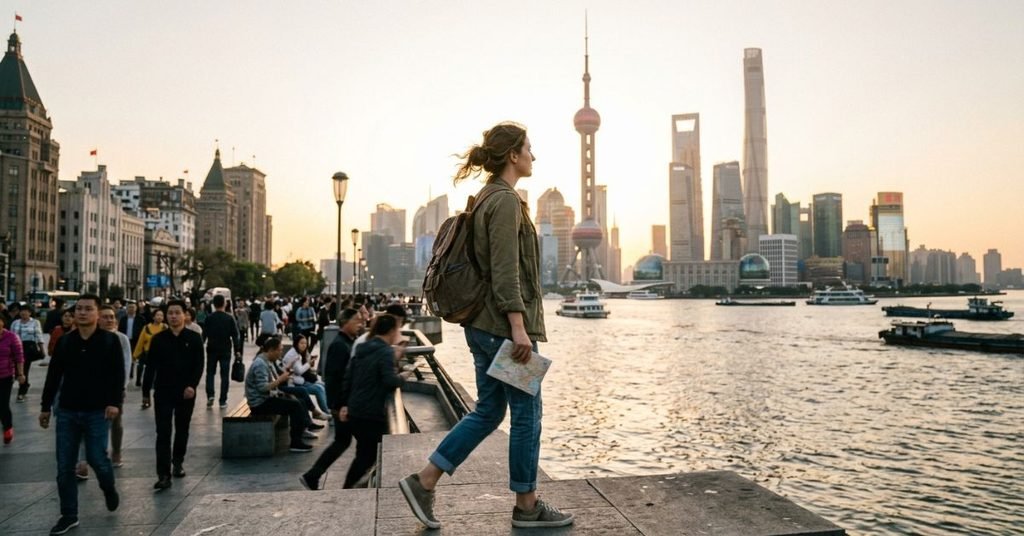
If I had only a few hours in Shanghai, The Bund would be one of my first stops.
The waterfront promenade runs along the Huangpu River and gives you one of the city’s defining views: historic European-style buildings on one side and the futuristic Pudong skyline across the water.
The official Shanghai tourism authority describes the Bund and Lujiazui together as a classic way to experience the contrast between Shanghai’s historic architecture and modern skyscrapers.
Why Visit the Bund?
- Incredible skyline photography
- Historic architecture
- Huangpu River views
- Excellent evening atmosphere
- Easy connection to Nanjing Road and nearby attractions
Photography tip: Go around sunrise if you want fewer people. For the classic illuminated skyline, return after dark.
For couples, an evening walk along the river is especially atmospheric.
2. See Shanghai from Lujiazui
Cross the Huangpu River and the personality of Shanghai changes completely.
Lujiazui is the futuristic financial district where you’ll find some of the city’s most recognizable skyscrapers, including Shanghai Tower, Jin Mao Tower, Shanghai World Financial Center, and the Oriental Pearl.
The area is officially highlighted as one of Shanghai’s major skyline destinations.
I recommend walking around the district even if you don’t pay to enter an observation deck. Looking upward from street level is impressive enough.
Best Photography Spots
Try:
- Lujiazui waterfront
- Pedestrian bridges around the financial district
- Shanghai Tower surroundings
- Views back toward the Bund
- Huangpu River promenade
3. Go Up the Oriental Pearl Tower
The Oriental Pearl Radio & TV Tower is one of Shanghai’s signature landmarks.
Standing 468 meters high, it has multiple observation areas, including elevated viewing platforms and a transparent glass skywalk.
The official visitor information currently lists operating hours of 8:00 AM–10:00 PM, with last entry at 9:00 PM, although travelers should verify the schedule before visiting.
Is It Worth Going Up?
If you love:
- City photography
- Skyscraper views
- Architecture
- Nighttime scenery
then it can be a memorable experience.
For the most dramatic cityscape, consider visiting near sunset and staying until the lights come on.
4. Explore Yu Garden
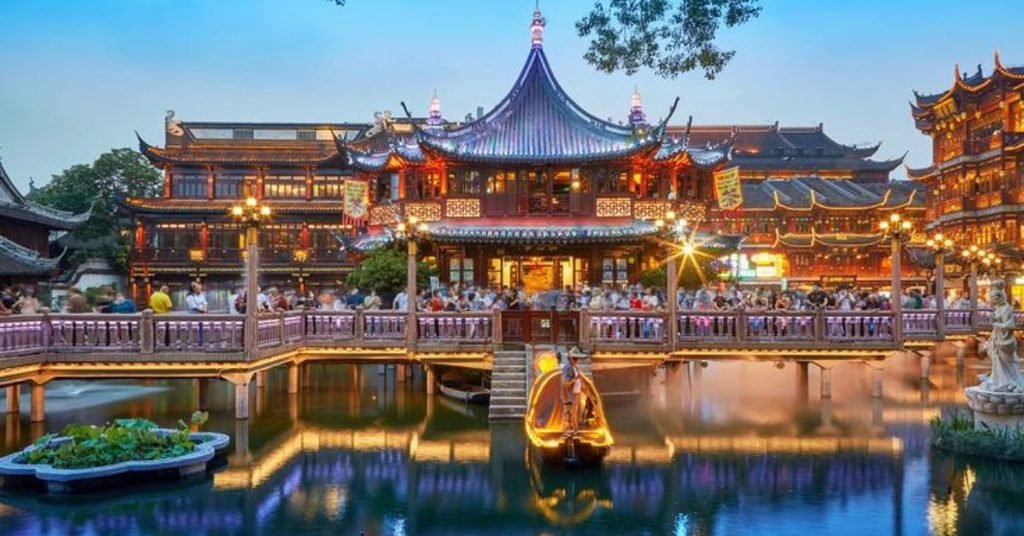
After Shanghai’s skyscrapers, Yu Garden feels like stepping into another era.
This classical Chinese garden dates back to the Ming Dynasty. It was originally created in the 16th century by Pan Yunduan and has become one of the city’s best-known historical attractions.
Inside, expect:
- Rockeries
- Ponds
- Traditional pavilions
- Decorative walls
- Small bridges
- Classical Chinese garden design
The surrounding Yu Garden area also includes the City God Temple and a large commercial district, making it easy to spend several hours here.
My Tip
Don’t rush straight through the garden.
Walk slowly, look at the roof details, photograph the ponds, and explore the surrounding lanes afterward.
5. Wander Nanjing Road Pedestrian Street
Shanghai’s famous shopping artery is another place where the city feels enormous.
Nanjing Road Pedestrian Street is especially lively after dark, when illuminated signs, department stores, restaurants, and crowds create a classic big-city atmosphere.
It also fits naturally into a sightseeing route connecting Lujiazui, the Bund, Yu Garden, and Huangpu River attractions. Shanghai’s official tourism authority currently promotes routes linking these major landmarks.
You don’t need to spend money here.
Sometimes the best thing to do is simply walk.
6. Visit Shanghai Museum
For travelers interested in Chinese history and art, Shanghai Museum at People’s Square deserves several hours.
The museum’s People’s Square branch currently operates from 9:00 AM to 5:00 PM, with last entry at 4:00 PM, and is normally closed on Mondays except public holidays.
A particularly useful 2026 update for independent travelers is that the museum has been trialing admission without advance reservation for individual visitors, although reservations can still be required during national holidays, school vacations, or major exhibitions.
Important: Special exhibitions may have separate ticketing or reservation requirements.
7. Take a Huangpu River Cruise
If Shanghai’s skyline looks impressive from land, wait until you see it from the water.
A Huangpu River cruise gives you a moving panorama of both sides of the city.
The city’s official tourism authority currently recommends multiple river routes, including itineraries connecting Lujiazui, the Oriental Pearl, Nanjing Road, the Bund, Yu Garden and the old city area.
When Should You Go?
I’d choose early evening or nighttime.
During the day, you see architectural details. After dark, Shanghai becomes a sea of lights.
The main sightseeing cruise terminals are around Shiliupu, and tickets can be obtained through official cruise channels and local tourism platforms.
8. Discover Xintiandi
For a completely different side of Shanghai, head to Xintiandi.
This neighborhood blends restored historic architecture with cafés, restaurants, boutiques, and modern nightlife.
It’s particularly good for:
- Couples
- Evening walks
- Restaurants
- Coffee
- Architecture photography
Rather than treating it as a single attraction, think of Xintiandi as somewhere to slow down after visiting museums and major landmarks.
9. Explore Shanghai’s Former Concessions and Old Streets
One of my favorite ways to experience Shanghai is simply to walk.
Away from the skyscrapers, parts of the city reveal leafy streets, historic residences, cafés, independent shops, and neighborhoods that feel far removed from the financial district.
Spend a few hours exploring areas around:
- Former French Concession
- Wukang Road
- Anfu Road
- Tianzifang
- Xintiandi
The goal isn’t necessarily to reach one particular attraction.
Let the neighborhood become the attraction.
If you have the time, don’t rush from one attraction to another; some of my favorite Shanghai moments came from simply walking, trying local food, and discovering quiet corners along the way.
10. Photograph Wukang Road
Wukang Road is especially appealing if you enjoy urban photography.
The streets are lined with mature trees and historic buildings, while cafés and small businesses create a more relaxed atmosphere.
Go in the morning for softer light or later in the afternoon when the neighborhood becomes more social.
For couples, this is also one of the better areas for a slower city walk away from the busiest tourist corridors.
11. Visit Tianzifang
Tianzifang is a maze of narrow lanes packed with small shops, cafés, restaurants, galleries, and creative businesses.
It’s a place to wander rather than follow a strict itinerary.
You may find:
- Local crafts
- Art
- Souvenirs
- Desserts
- Coffee shops
- Small restaurants
I wouldn’t dedicate an entire day to Tianzifang, but 1–2 hours works well when combined with nearby attractions.
12. Spend an Evening at Shanghai Disneyland
For travelers who enjoy theme parks, Shanghai Disneyland can easily consume an entire day.
The resort currently offers access to eight themed lands with one park ticket, and its official ticket structure uses multiple pricing tiers. Standard one-day admission currently starts from RMB 475, although actual prices depend on the selected date and product.
The resort also recommends public transportation, taxis, or other public transport because parking can become heavily occupied during weekends and holidays.
Allow a Full Day
Don’t try to combine Disneyland with the Bund on the same day.
Arrive early, choose your priority attractions, take breaks, and stay into the evening if nighttime entertainment is important to you.
13. Try Shanghai’s Local Food
A trip to Shanghai isn’t complete without eating.
Look for classics such as:
- Xiaolongbao — soup-filled steamed dumplings
- Shengjian mantou — pan-fried buns
- Scallion oil noodles
- Hongshao-style dishes
- Shanghai-style wontons
- Local pastries and desserts
Don’t only eat in major tourist districts.
One of my favorite travel habits is to find a busy neighborhood restaurant filled with local customers, then order something that looks unfamiliar.
That’s often where the memorable meal happens.
14. Explore Shanghai’s Nightlife and Skyline
Shanghai after dark is almost a separate destination.
You can choose between:
- Bund skyline walks
- Rooftop bars
- Huangpu River cruises
- Lujiazui night views
- Nanjing Road
- Xintiandi restaurants
- Live entertainment
If photography is your priority, give yourself at least one completely unplanned evening.
Walk until you find a view you like.
15. Ride Shanghai’s Metro Like a Local
For independent travelers, the Shanghai Metro should be your main transportation tool.
Current Shanghai government information says the metro uses distance-based fares beginning at RMB 3 for journeys up to 6 km, with RMB 1 added for every additional 10 km.
Eligible international contactless cards—including Visa, Mastercard, American Express, JCB and UnionPay—can currently be used for Tap to Ride on supported metro gates.
That makes moving around the city considerably easier than relying on taxis for every journey.
16. Take a Day Trip to Zhujiajiao
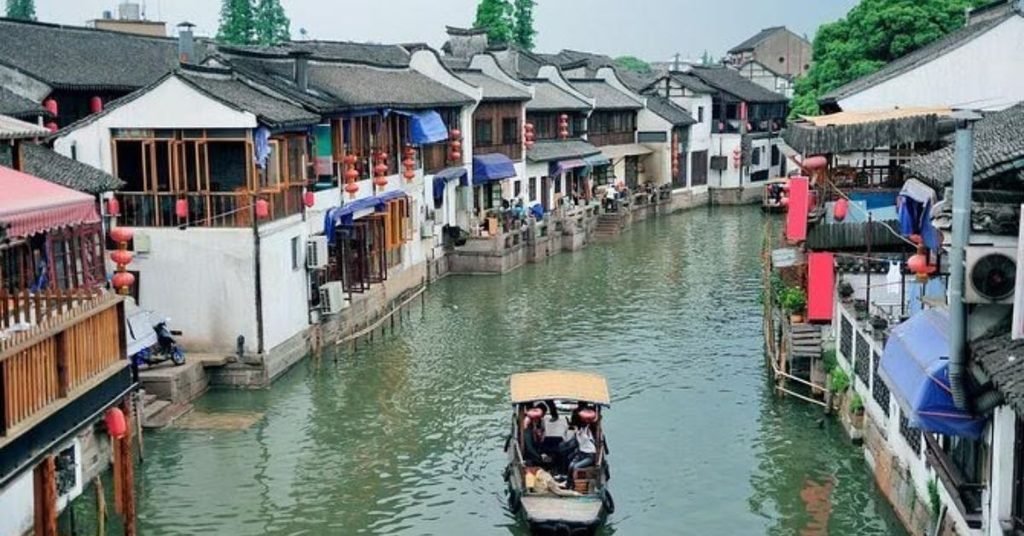
If you have four or five days in Shanghai, consider leaving the skyscrapers for a day.
Zhujiajiao Water Town offers canals, stone bridges, traditional architecture, narrow lanes, and a slower atmosphere.
It’s useful for travelers who want to experience a different side of the Yangtze River Delta rather than spending every day inside central Shanghai.
Allow most of a day if you want to explore without rushing.
Other Popular Chinese Destinations vs Shanghai
Shanghai works particularly well as part of a larger China itinerary, but each nearby or commonly paired destination offers a different experience.
| Destination | Main Experience | Ideal For |
|---|---|---|
| Shanghai | Skyscrapers, history, shopping, food, museums, nightlife | First-time city explorers |
| Suzhou | Classical gardens, canals, traditional culture | Garden and heritage lovers |
| Hangzhou | West Lake, tea culture, landscapes | Nature + relaxed city travel |
| Beijing | Imperial history, major monuments, museums | Deep historical exploration |
Shanghai vs Suzhou
Suzhou is much more focused on classical gardens, canals, and traditional landscapes. Shanghai feels considerably more metropolitan.
If you have limited time, combining the two gives you a useful contrast between modern urban China and traditional Jiangnan culture.
Shanghai vs Hangzhou
Hangzhou is particularly associated with West Lake and surrounding landscapes, while Shanghai is more about architecture, urban energy, food, shopping, and the Huangpu skyline.
Shanghai vs Beijing
Beijing is oriented much more toward China’s imperial and political history, while Shanghai offers a striking combination of international architecture, modern finance, historic neighborhoods, and contemporary culture.
How to Get to Shanghai
From Pudong International Airport
Pudong International Airport is connected with central Shanghai by metro and other transport.
Shanghai government information lists Metro Line 2 as an economical airport option, with a journey to People’s Square taking around an hour and a fare of roughly RMB 7 on the cited route.
There is also an Airport Link Line connecting Pudong and Hongqiao airports in about 40 minutes. The full Airport Link journey costs RMB 26, with fares starting from RMB 4 for shorter journeys.
From Hongqiao International Airport
Hongqiao is particularly convenient if you’re arriving on a domestic or regional flight.
The metro connects the airport with the wider Shanghai network, while the Airport Link Line provides a fast connection toward Pudong.
Driving vs Public Transport
For first-time independent travelers, I would generally build the itinerary around metro + walking rather than renting a car.
Shanghai is huge, and traffic can make road travel slower than expected.
A private car or organized tour becomes more useful when you’re traveling outside the central city or visiting multiple suburban attractions.
A Realistic One-Day Shanghai Itinerary
If you only have one full day, don’t try to see everything.
7:30 AM — Yu Garden
Start early and explore the classical garden before the busiest part of the day.
9:30 AM — Old City + Breakfast
Walk around the surrounding streets and try xiaolongbao or another local breakfast.
11:00 AM — Nanjing Road
Walk toward Nanjing Road and explore the pedestrian area.
12:30 PM — Lunch
Choose a local Shanghai restaurant rather than spending your entire lunch inside a major shopping mall.
2:00 PM — Lujiazui
Cross the river and explore the futuristic financial district.
3:30 PM — Oriental Pearl or Another Observation Deck
Choose one major skyline attraction rather than trying to visit every tower.
5:30 PM — Huangpu River
Take an early evening cruise or return to the waterfront.
7:00 PM — The Bund
Walk along the Bund as the skyline begins to illuminate.
8:30 PM — Dinner
Finish with Shanghai cuisine near Huangpu or another central neighborhood.
10:00 PM — Night Walk
If you’re still energetic, take one final walk through the illuminated city.
Practical Shanghai Travel Tips
When Is the Best Time to Visit Shanghai?
For comfortable sightseeing, spring and autumn are generally the easiest seasons to plan around.
Shanghai can be hot and humid in summer, while the city’s plum-rain period is associated with persistent humidity and heavier rainfall. Shanghai’s official tourism site describes the Meiyu season as a notably damp period, generally around late June to early July.
My Preferred Months
Consider:
- March–May: pleasant spring atmosphere
- September–November: comfortable autumn sightseeing
- June–August: hotter, more humid, potentially rainy
- Winter: cooler and often less comfortable for long outdoor walks
Always check the short-term forecast before your trip.
What Should You Pack?
For a Shanghai city trip, I would pack:
- Comfortable walking shoes
- Lightweight rain jacket
- Small umbrella
- Portable power bank
- Universal travel adapter
- Reusable water bottle
- Passport
- Small day bag
- Offline copies of hotel and transport information
Good walking shoes matter more than people expect. Shanghai days can involve 15,000–25,000 steps without deliberately planning a hiking day.
Mobile Data, SIM Cards and Connectivity
Shanghai is highly digital, and your phone will be central to transportation, payments, navigation, and communication.
The city currently provides airport service centers at Pudong Terminals 1 and 2 and Hongqiao Terminal 1 that can assist international visitors with SIM cards, transportation, payments, maps, and commonly used apps.
Before leaving the airport, make sure your phone can connect to mobile data.
Also download or prepare:
- Translation tools
- Offline maps
- Hotel address in Chinese
- Important train/flight information
- Payment apps
How Do Foreign Travelers Pay in Shanghai?
This has become substantially easier.
International visitors can currently link eligible overseas cards to Alipay or Weixin Pay, while participating merchants also accept international cards directly.
For linked international cards, the current published limits are up to US$5,000 per transaction and US$50,000 annually, while transactions above RMB 200 may generally incur a 3% service fee.
Still, I recommend carrying a small amount of RMB as a backup.
Is Shanghai Safe for Travelers?
Shanghai is a major international city with extensive public transportation and a large tourism infrastructure.
The more realistic concerns for visitors are ordinary big-city issues:
- Keep your phone secure in crowded areas
- Watch belongings around busy stations
- Use official transportation
- Confirm prices before accepting private services
- Keep your passport secure
- Be cautious with unfamiliar booking websites or unofficial ticket sellers
For major attractions, purchase tickets through official or authorized channels whenever possible.
Shanghai Disneyland, for example, specifically advises visitors to use official or authorized purchasing channels.
Frequently Asked Questions About Things to Do Shanghai
What are the best things to do in Shanghai for first-time visitors?
Start with The Bund, Lujiazui, Yu Garden, Nanjing Road, Shanghai Museum, and a Huangpu River cruise. These experiences provide a good introduction to Shanghai’s historic architecture, modern skyline, culture, food, and nightlife.
How many days do you need in Shanghai?
Three to five days is a comfortable amount of time for a first visit. Three days covers the major central attractions, while four or five days gives you time for museums, neighborhoods, food experiences, and a possible water-town day trip.
Is Shanghai expensive for tourists?
Shanghai can be visited at very different budgets. Public transportation is relatively inexpensive, with metro fares starting at RMB 3, while accommodation, restaurants, observation decks, cruises, and theme parks can substantially increase daily spending.
Is Shanghai worth visiting?
Yes, if you want a destination where historic China, international architecture, futuristic skyscrapers, food culture, museums, shopping, and energetic city life exist within the same trip.
The city is particularly interesting when you avoid treating it as a checklist of attractions and instead combine famous landmarks with neighborhood walks and local food.
Is Shanghai Worth It?
Shanghai is worth visiting for travelers who want variety.
You can watch the skyline from the Bund in the evening, explore a centuries-old garden the next morning, eat dumplings in a neighborhood restaurant, ride an ultra-modern metro system, visit a world-class museum, and finish the day beside the Huangpu River.
That contrast is what makes Shanghai memorable.
For a first trip, I would give the city at least three full days, with four or five days if you want to slow down and add Zhujiajiao or another nearby destination.
And don’t make your Shanghai itinerary too rigid.
Leave room for the unexpected café, the quiet side street, the crowded food stall, and the viewpoint you discover simply because you took the wrong turn.
Planning a China adventure? Explore more destination guides, practical travel ideas, and inspiring journeys on WordisHub.
Explore WordisHub Travel Guides
Sources for current travel information: Official Shanghai China Travel Website · Shanghai Government – Transportation & Visitor Services · Shanghai Disney Resort

1 thought on “18 Things to Do Shanghai: A First-Time Travel Guide”